Welcome to the 2027 GCSE Music Composition Board-Set Brief Blog series.
This series is designed to save you time and some practical starting points. For each of the main exam boards – AQA, Edexcel, Eduqas, WJEC and OCR – we’ll break down the new briefs into clear, manageable components. Inside each guide, you’ll find overviews, exemplar listening lists, key pitfalls to avoid, and adaptable classroom starter activities.
Bookmark this page, grab a cup of tea, and explore the breakdown for your board to help your students hit the ground running this term.
This guide is designed for teacher planning and general skill-building prior to controlled assessment. In accordance with JCQ rules, the activities, suggestions and listening examples provided here must not be used as pre-prepared candidate work or model solutions for live NEA. This guide is not endorsed, affiliated with, or approved by AQA. Always refer to the official specification and JCQ guidelines for definitive assessment requirements. Briefs are accessed through the exam board secure portal.
At a glance summary
| Summary | Description | |
| Brief 1 | School Prom | Must include given note pattern stimulus in full. Occasion: School Prom. |
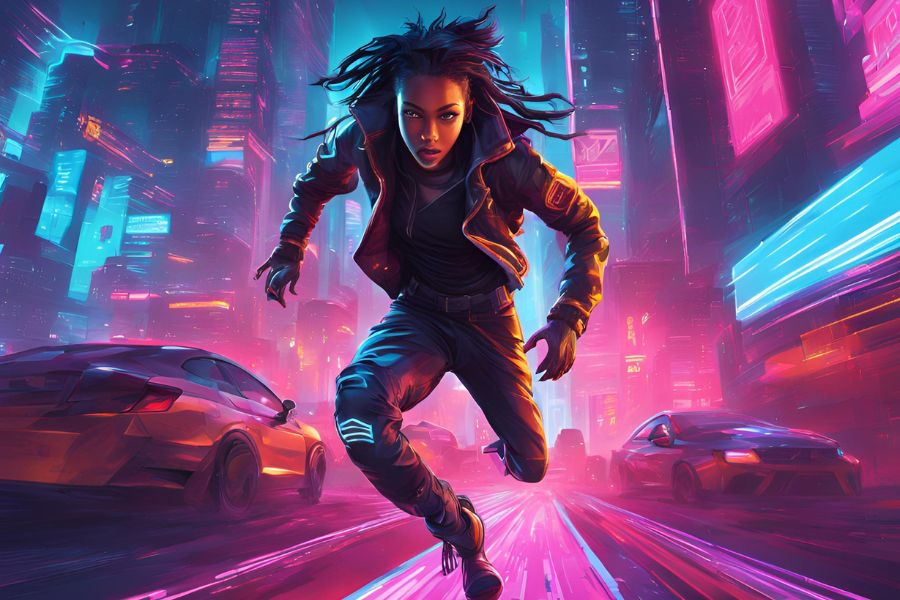
| Brief 2 | Art Exhibition | Image stimulus (Night Lights: city street at night with car light trails). Occasion: Art Exhibition. |
| Brief 3 | Video Game | Text stimulus: “Courage is always there – sometimes silent, but never gone”. Context: Video Game. |
| Brief 4 | Public Parade | Concept stimulus: Parade called Past and Present. Occasion: Public Parade. |
Brief by brief breakdown
1. School Prom
Brief focus:
Composing an original piece of music for any choice of instruments or voices, written in any musical style, to be played at a school prom celebration. The composition must incorporate the provided 4-bar musical melody/rhythm in full at least once during the piece.
Decoding the brief
This brief asks for a piece suited for a school prom event. This could be celebratory, upbeat, or reflective in mood, but it does need to be appropriate for a prom. The non-negotiable here is the given 4-bar musical stimulus, which must be integrated into the composition at least once in its complete form. It could serve as the opening main theme, a bridge section, or a hook in a song chorus.
Exemplar listening
Kool and the Gang: Celebration
A classic party anthem demonstrating clear verse-chorus structure and use of riffs.
Daft Punk: Give Life Back to Music
A modern example blending funk guitar riffs, synth pads, and driving disco rhythms.
Raye: Worth It
A warm, upbeat R&B/jazz-pop groove recorded with live brass, strings, and rhythm section, offering a good example for a modern prom arrival or dance track.
Snarky Puppy: Thing of Gold
An instrumental jazz-fusion track combining a driving rhythm section, memorable and melodic motifs, demonstrating how to build energy for an event without a singer.
Cory Wong: Cosmic Sans
An instrumental funk-pop track with rhythm guitar riffs, energetic brass stabs, and synth solos.
Getting started activity
Ask students to improvise on instruments using the given stimulus, focussing particularly on the rhythm, to create a bass riff. Once they have a motif, repeat it and add layers to build up the texture.
Watch out for:
- Forgetting or altering the stimulus: students often tweak notes in the stimulus or only use part of it. Remind them that AQA requires the stimulus to appear in its entirety at least once.
Further Resources:
- Online course: How to Compose a Pop Song
- Online course: Ready to Compose (exploring melody, rhythm, harmony)
- Free course: Composition – How to Get Started

Note: all courses and resources are included in the Teacher Access Plan (better value!)
2. Art Exhibition
Brief focus:
Composing a piece for any combination of instruments or voices in any style to be played at an art exhibition named Night Lights. The piece should draw creative inspiration directly from the provided photograph.
Decoding the brief
Students must compose an atmospheric piece inspired by the provided photograph (a wet, dark urban street at night with long-exposure red and white car light trails). The music needs to suit an art gallery exhibition setting (Night Lights).
Exemplar listening
Entr’acte by Caroline Shaw
A Pulitzer Prize-winning contemporary string quartet piece that uses repetition, techniques such as glissandi, sul ponticello, harmonics and pizzicato, to capture light and space.
Sweden from Minecraft (C418)
An ambient piano/synth track showing how subtle textures depict light and space without overcomplicating the score.
Blue Cathedral by Jennifer Higdon
A contemporary classical example using shimmering percussion, bowed glockenspiel, and soaring woodwind and string lines to portray light and reflections.
Suggested classroom activity
Display the Night Lights image on the board. Ask students to create two contrasting sound layers: (1) drones moving between consonance and dissonance – wet/dark layer representing the street, and (2) a moving, ostinato line (perhaps strings or piano) representing the streaks of moving traffic headlights. This can be the basis on which melodic themes can be built.
Watch out for:
Lack of Musical Structure: open atmospheric briefs can lead students to music with little structure or direction. Encourage the use of Ternary (ABA) or similar to ensure clear sections and sense of momentum.
Further Resources
- Resource: Descriptive Music Listening Pack
- Online course: How to Compose a Great Melody
- Free Inspiration Page

Note: all courses and resources are included in the Teacher Access Plan (better value!)
3. Video Game
Brief focus:
Composing a piece of video game music for any instrumentation or style that reflects the theme of inner strength and perseverance. Your music should convey the message of the given prompt: that bravery can be quiet and subtle, but it never disappears.
Decoding the brief
This brief calls for a game soundtrack piece that musically illustrates the quote’s narrative arc: starting subtle, quiet, or tentative (“sometimes silent”), building through adversity, and reaching a heroic, resolute climax (“never gone”).
Exemplar listening
Zelda’s Lullaby from Legend of Zelda by Koji Kondo
An example of a simple but memorable motif built on a broken chord pattern. It represents courage and hope across the game narrative.
‘Nascence’ from Journey by Austin Wintory
This track illustrates how a simple solo cello theme and bass flute can build quietly into a sweeping, heroic statement.
Assassin’s Creed Valhalla by Sarah Schachner
A modern, cinematic score blending traditional folk instruments with brass and driving percussion to build emotional resolve and strength.
Ori and the Blind Forest by Gareth Coker
An instrumental example showing how a delicate opening melody can build into a triumphant, orchestral climax.
Suggested classroom activity
Ask students to compose a short 4-note ‘courage motif’, thinking about strong melodic intervals (5ths, octaves). They could record it first on a solo woodwind/piano with minimal accompaniment, then re-harmonise and orchestrate the same motif with full brass, strings, and percussion for the climax.
Watch out for:
Continuous chaos! Sometimes students write the full piece first, without leaving room for the build up. Simplicity is key! Remind them that the quote explicitly mentions ‘sometimes silent’ – dynamic growth and textural contrast are important here for top-band marks.
Further Resources:
- Free online course: How to Compose Video Game Music
- Online course: Composing a Melody Using the Defining Feature Approach
Note: all courses and resources are included in the Teacher Access Plan (better value!)
4. Parade – Past and Present
Brief focus:
Composing a piece for a public parade named Past and Present. The composition can be written for any instrumentation or vocal setup, in any style, and should capture a processional feel while musically exploring the theme of contrasting time periods.
Decoding the brief
This brief calls for a processional piece for a public parade with the thematic contrast of Past and Present. This could invite a fusion approach: contrasting historical musical styles (e.g. traditional march rhythms, folk melodies, Baroque ground bass) with modern elements (e.g. electronic beats, synth bass etc.).
Exemplar listening
Chicken Run Main Titles by John Powell
A great example for processional marching snare rhythms mixed with catchy syncopated melodic themes.
Wolf Hall by Debbie Wiseman
This example features a distinct Tudor-inspired theme played on cor anglais, but supported by modern orchestral string ostinati with steady, rhythmic momentum.
The Olympic Spirit by John Williams
The gold standard for processional parade brass fanfares and marching percussion.
Mighty River by Errollyn Wallen
A brilliant example of combining past and present, weaving traditional heritage motifs (opening theme) into contemporary classical orchestration and driving brass fanfares.
Suggested classroom activity
Establish a steady processional pulse in 4/4 or 2/4 time, using a marching snare rhythm (to start with). Ask students to compose a 4-bar melodic motif (they could use a mode for a traditional feel) to represent the ‘Past,’. They could start with a simple chord sequence (potentially using chords with an omitted 3rd). Then add some modern elements such as a synth bassline, drum machine pattern, or string ostinati (like the Wolf Hall track) underneath in section B to introduce the ‘Present.’
Watch out for:
Losing the processional pulse: parade music needs a strong, steady rhythmic backbone. Warn students against sudden unmeasured tempo changes.
Further resources:
- Online course: How to Compose a Fanfare
- Resource: Fusion Music Listening Pack
- Free Inspiration Page (choose ‘fusion’ in the filter)

Note: all courses and resources are included in the Teacher Access Plan (better value!)
General Admin & Submission Checklist
Duration Requirements
- Combined Total: Composition 1 (Brief) and Composition 2 (Free) must last a combined minimum of 3 minutes.
- No Maximum: There is no official maximum limit, but quality beats quantity!
- Under-length Penalty: A strict proportional mark penalty applies if the combined total is under 3 minutes.
Documentation & Score Requirements
- For each composition, you must submit:
- Audio File: Preferably
.mp3format (though.wavor standard play formats are acceptable). - Score/Guide: A notated staff score, annotated lead sheet, or aural guide (for DAW/sequenced tracks).
- Programme Note: brief candidate statement outlining the intended audience, occasion, and chosen musical elements.
Authentication & Monitoring
- Teachers must supervise progress sufficiently to confidently sign off the work as authentic student output.
- Final submission deadline to AQA is 7th May 2027.