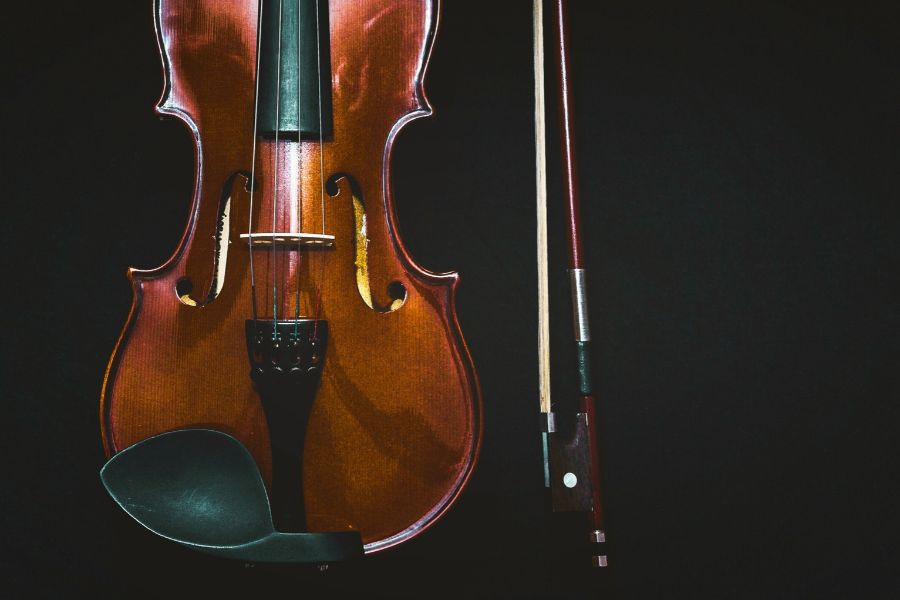
We’re thrilled to announce a new course on the site – Composing for Instruments. This technical course takes secondary level students through writing for strings, woodwind and brass.
The first section covers instrument identification, recommended listening and transposition. Then we dive deeper with a section on each instrumental family.
New collaboration: Owen James
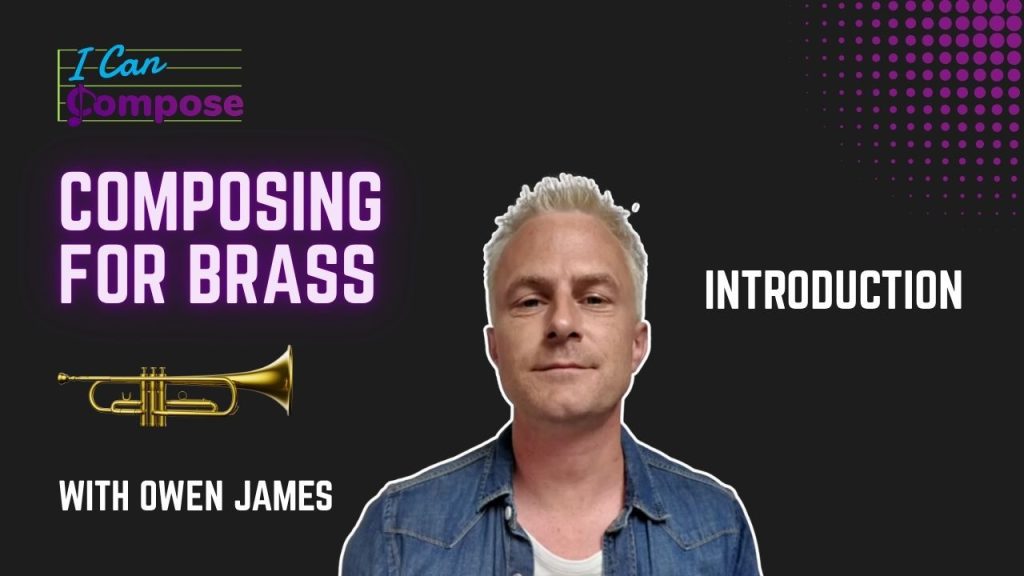
This course has been a fantastic opportunity to collaborate with brass specialist, Owen James, who has created bespoke videos for this course, to demonstrate features and special techniques.
What does the course include?
Composing for Instruments is aimed at 14-18 year olds and is ideal to use as part of an MYP 4/5, GCSE / iGCSE Music and A level Music course. There are 4 main sections: Introduction, Strings, Woodwind and Brass.
Each lesson contains:
- Practical composing/arranging tasks
- Clear examples with definitions and audio
- Video content
- Interactive quizzes
Examples of Practical Tasks
Throughout the course, theoretical and technical information is combined with real application for young composers.
For example, in the ‘Lyrical Brass’ lesson we explore how a brass ensemble can play a 4-part chorale and then have a go at arranging a hymn for brass.
Some tasks are short, composing 4 or 8 bars, and others are longer, bringing together what we’ve learned throughout the course. These tasks can be done on a DAW, instrument with pencil & paper or a notation software programme.
Exemplar listening: exploring the trailblazers
We wanted this course to offer something different to other resources, which may focus on similar key pieces, showcasing instruments in the same way. The exemplar listening throughout is diverse and will hopefully introduce students to new repertoire and artists.
Do students have to read staff notation for this course?
It’s helpful if students can read staff notation because we do look at transposing instruments and writing for different ensembles. However, even if a student doesn’t read notation, they can still learn a great deal about special techniques, pitch ranges and other technical aspects of strings, brass and woodwind.
How to use this ‘Composing for Instruments‘ course
Every classroom is different and teachers use our courses in various ways to suit their set-up and students:
- Display at the front and work through together with the class
- Use the content to inform personal lesson planning.
- Use as part of the Classroom Access Plan where students can work through the content at their own pace.
Celebrating success
With all our courses students receive a certificate upon completion and an award badge on their personal dashboard.
Let’s get started…
If you want to find out more head to our courses page. For best value our Individual or Teacher Access Plans provide 12 months’ access to all the courses. And if you’re looking for access for a whole class so that you’re students can work through the courses at their own pace, have a look at our Classroom Access Plan.