Welcome to the 2027 GCSE Music Composition Board-Set Brief Blog series.
The release of the exam board set briefs on 1st September always brings a mix of anticipation and a sudden urge to get planning!
This series is designed to save you time and give you a practical starting point. For each of the main exam boards, we’ll break down the new briefs into clear, manageable components. Inside each guide, you’ll find overviews, exemplar listening lists, key pitfalls to avoid, and adaptable classroom starter activities.
Bookmark this page, grab a cup of tea, and explore the breakdown for your board to help your students hit the ground running this term.
This guide provides independent teaching ideas by I Can Compose and is not endorsed, affiliated with, or approved by Eduqas. Always refer to the official specification and JCQ guidelines for definitive assessment requirements.
The briefs have been summarised here, they cannot be displayed in full, under JCQ rules – please log into the secure exam portal to download the official briefs.
At a glance summary
| Area of Study | Key points | |
| Brief 1 | Musical forms and devices | Free choice of ensemble; must explicitly feature ostinato and modulation. |
| Brief 2 | Ensemble Music | Ensemble piece for a new Bugsy Malone musical adaptation; free instrumentation. |
| Brief 3 | Film Music | Score for the opening scene of a new Robin Hood film. |
| Brief 4 | Popular Music | Song for a vocal group featuring lead and backing vocals with instrumental accompaniment. |
Brief by brief breakdown
1. Musical forms & devices
Summary of brief:
Free choice of ensemble; must explicitly feature ostinato and modulation.
Decoding the brief
- Must include a repeating rhythmic/melodic pattern (ostinato) and a clear transition to a new key signature/tonal centre (modulation).
- Freedom: flexibility over genre, ensemble size, and structural form (e.g. Ternary, Ground Bass, Rondo).
Exemplar listening
1. Mars: The Bringer of War by Gustav Holst
- Demonstrates a persistent 5/4 ostinato driving momentum.
- Also look at John Williams’ ‘Imperial March’ from Star Wars.
2. Traces of You by Anoushka Shankar (feat. Norah Jones)
- An example of a traditional Indian tabla and sitar ostinato pattern framing the piece.
3. Under Pressure by David Bowie & Queen
- Famous bass ostinato
- Listen out for the modulation (to the subdominant) in the bridge section.
Getting started activity
Ask students to map out a 3-part form (A-B-A) and identify which key section A will be in, where the modulation will occur (and what it will be), and how they will get back to the tonic key in the return of A.
Sketch out ideas for the ostinato which will form the basis of the composition. Students could use a chord sequence, rhythm or pitch contour as a starting point. They should also think about the instrumentation.
What to know: Modulation
- Common keys to move to (relative major/minor; dominant; subdominant)
- Using pivot chords
- Using a perfect cadence to establish the new key
What to know: Ostinato
- Repeating melodic or rhythmic pattern
- How the ostinato will evolve, whilst still maintaining the integrity of the musical idea (e.g. rhythmic augmentation / diminution in the middle section or fragmentation in the final section of the composition.)
Watch out for:
- Unprepared modulations: In this brief, students need to be able to handle modulations, demonstrating that they can use a pivot chord and cadence, to smoothly move to the new key.
- Static ostinati: Allowing the ostinato to repeat endlessly without varying dynamic level, instrumentation, or layering, leading to lower marks in structural development.
Further Resources:
Online courses: Ready to Compose shows students how to compose and develop an ostinato pattern. How to Modulate takes students through modulating to 12 different keys.

Note: all resources and courses are included in the Teacher Access Plan (better value!)
2. Ensemble:
Summary of brief:
Ensemble piece for a new Bugsy Malone musical adaptation; free instrumentation.
Decoding the brief
Must be an ensemble piece (at least two distinct interacting parts/lines) and fit the stylistic/dramatic context of Bugsy Malone (1920s Prohibition-era jazz, ragtime, Dixieland, speakeasy vibe, or theatrical song).
Freedom: can be purely instrumental (e.g. a chase sequence/entr’acte) or a vocal ensemble number with accompaniment.
Exemplar listening
You Give a Little Love (from Bugsy Malone)
- Reference point for lighthearted 1920s stride piano, brass stabs, and ensemble vocal hooks.
Razzle Dazzle (from Chicago)
- Example of vamp-driven jazz textures, walking basslines, and syncopated brass punctuation.
Maple Leaf Rag by Scott Joplin
- Key example of rag-time repertoire with ragtime syncopation, stride bass patterns, and 2/4 march metre.
Suggested classroom activity
Ask students to create a character or scene profile (e.g. a chaotic gun chase, a secret speakeasy meeting, or a dramatic character introduction) and list 3 musical conventions that fit that mood.
Watch out for:
Anachronistic styles: writing a modern synth-pop or heavy rock track that ignores the 1920s theatrical setting of the musical.
Solo focus: writing a solo piano piece without ensemble interaction or distinct multi-part textures.
Further resources
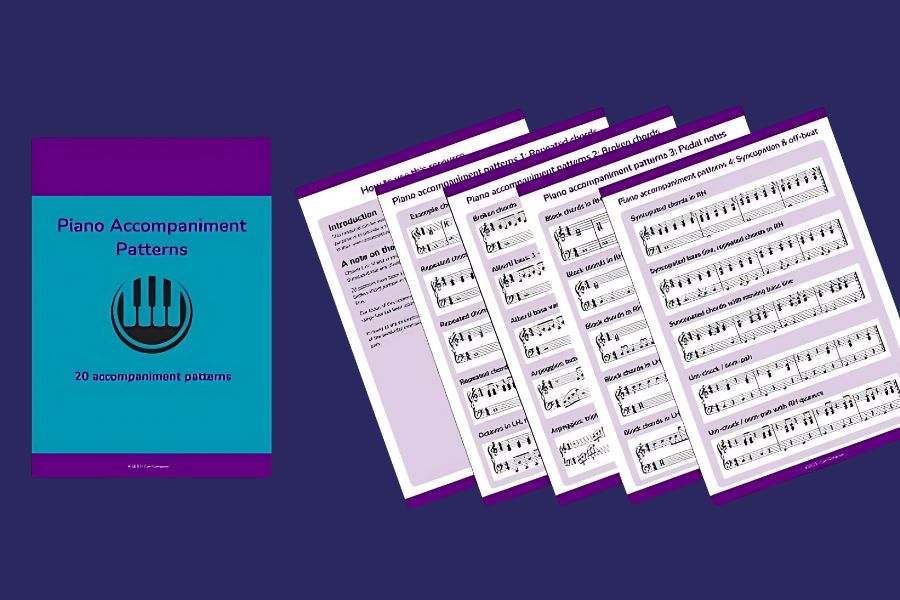
How to Write a Piano Accompaniment and Piano Accompaniment Patterns Resource both provide solid ideas and steps for students writing for piano.
Note: all resources and courses are included in the Teacher Access Plan (better value!)
3. Film Music
Summary of brief:
Score for the opening scene of a new Robin Hood film.
Decoding the brief
The music must function as film music for an opening scene. It needs to establish mood, setting (Sherwood Forest, medieval / heroic), and dramatic pacing suitable for introductory cinematic visuals.
Freedom: can range from heroic orchestral brass fanfares to folk-inspired medieval music, or a suspenseful action cue.
Exemplar listening
1. Main title for The Adventures of Robin Hood by Erich Korngold
- Brass and percussion fanfare theme.
- Listen out for the muted trumpets on the repeat.
2. Robin Hood Prince of Thieves by Michael Kamen
- Heroic fanfare themes featuring brass and percussion
- Build up from the start with a repeated low strings ostinato and French horn theme (such a classic!)
3. The Last Of The Mohicans by Trevor Jones & Randy Edelman
- Driving rhythmic ostinato patterns with expansive bass theme
- Lyrical trumpet/string theme
Suggested classroom activity
Explore using modes (e.g. Dorian) to help set the medieval scene. Using chords with the omitted 3rd can also give tonal ambiguity.
Ask students to create a fanfare theme, using short motifs of dotted/triplet rhythms, and tonic-dominant pitches.
Watch out for:
Lack of structure: Producing a collection of unrelated sound effects or random chord changes without a cohesive theme or melodic motif.
Static dynamics: Forgetting that opening scenes build anticipation; the cue must dynamically develop rather than staying at one volume level throughout.
Further resources:
Online courses: How to Compose a Fanfare and How to Compose Heroic Music take students through how to write an effective theme, with tips and techniques for adding the ‘wow’ factor.

Note: all resources and courses are included in the Teacher Access Plan (better value!)
4. Popular Music
Summary of brief:
Song for a vocal group featuring lead and backing vocals with instrumental accompaniment.
Decoding the brief
Must be in a popular music style, include instrumental accompaniment, and feature a vocal arrangement with clear distinction between lead vocals and backing vocals (e.g. harmonies, call-and-response, or vocal pads).
Freedom: choice of pop sub-genre (e.g. R&B, Gospel, Indie Pop, Boyband/Girl group pop).
Exemplar listening
Sing by Pentatonix
- Demonstration of how lead vocals interact with rhythmic backing vocal harmonies, vocal percussion, and counter-melodies.
September by Earth, Wind & Fire
- Call-and-Response: backing vocals fill the gaps between lead vocal phrases instead of just singing simultaneously.
- Thick chorus harmonies: stacked 3rd and 6th interval harmonies sit underneath the main melody.
Wings by Little Mix
A useful reference for arranging multi-part vocal harmonies in verse-chorus pop structures.
Suggested classroom activity
Ask students to analyse a pop chorus structure to identify 3 distinct roles backing vocals can play: 1) Sustained harmony (“Ooh/Aah”), 2) Rhythmic stabs/echoes of the lead phrase, or 3) Parallel 3rd/6th harmonies.
Watch out for:
Unison only: Having all vocalists sing the same pitch line in unison throughout, failing the ‘backing vocal arrangement’ requirement.
Overpowering backing lines: Writing backing vocal parts that clash rhythmically or harmonically with the main lead vocalist instead of supporting them.
Lyrics: Students should choose suitable words or write their own (AI could help here) but not choose words from a well-known song, as that could influence their musical response.
Further resources:
Online course: How to Compose a Pop Song take students through writing a ballad and includes sections on writing backing vocals.

Note: all resources and courses are included in the Teacher Access Plan (better value!)
General Admin & Submission Checklist
- Combined duration: Total length across both submitted compositions (Free + Brief) must be between 3 and 4 minutes.
- Score & documentation: Every piece requires a score, lead sheet, or annotated DAW screenshots alongside the audio recording. A Composing Log (using the template on the website) must also be submitted.
- Controlled Conditions & logging: Supervision – teachers must monitor student’s composing on at least 3 occasions and sign the authentication sheet.