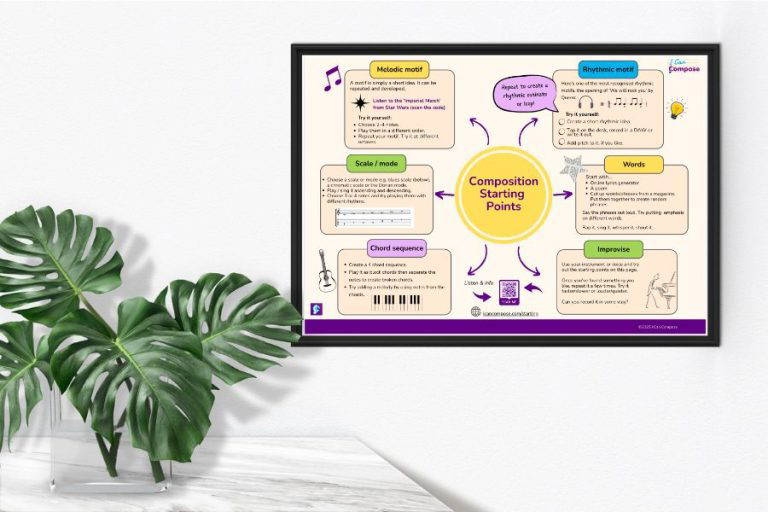
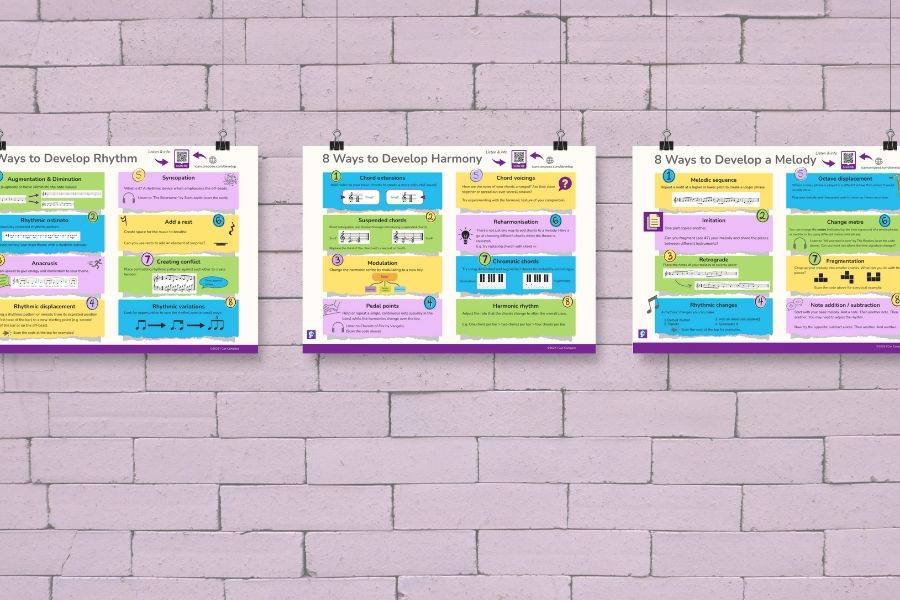
If you have purchased our interactive posters at a conference: 8 Ways to Develop a Melody; 8 Ways to Develop Rhythm and 8 Ways to Develop Harmony, this post provides the further information and accompanying audio tracks accessed via the QR code or weblink.
8 Ways to Develop Rhythm interactive poster
This interactive poster shares 8 techniques for developing rhythm.
1. Augmentation & Diminution
2. Rhythmic ostinato
3. Anacrusis (upbeat) examples
4. Rhythmic displacement
5. Syncopation examples
6. Add a rest
7. Creating conflict
8. Rhythmic variations


8 Ways to Develop Melody interactive poster
This interactive poster shares 8 techniques for developing an original melody.
1. Melodic sequence
Descending melodic sequence:

3. Retrograde
The Lamb by John Tavener
Tavener used both retrograde (reverse) and inversion (turning upside down) in his choral work ‘The Lamb’. Have a look at bar 4 – it is the retrograde of bar 3.
4. Rhythmic changes

Using our example from #1, notice how the first pair of quavers (eighth notes) of each bar is now a dotted quaver and semiquaver rhythm.
5. Octave displacement

Using our example from #1, the blue shaded area shows where a note has been moved up an octave. This follows smoothly into the following bar, also now an octave higher.
This technique is usually best used sparingly, otherwise the melodic line can sound disjointed.
7. Fragmentation
Music for 18 Musicians by Steve Reich
In Music for 18 Musicians, Reich starts with a simple rhythmic pattern and breaks it down into smaller fragments, then rearranges them to create a complex rhythmic texture.
Symphony no.5, 1st movement by Beethoven
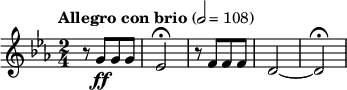
The well-known opening 4 note motif (above) is used throughout the 5th Symphony. The rhythmic cell is fragmented then repeated, and combined.
8. Note addition / subtraction
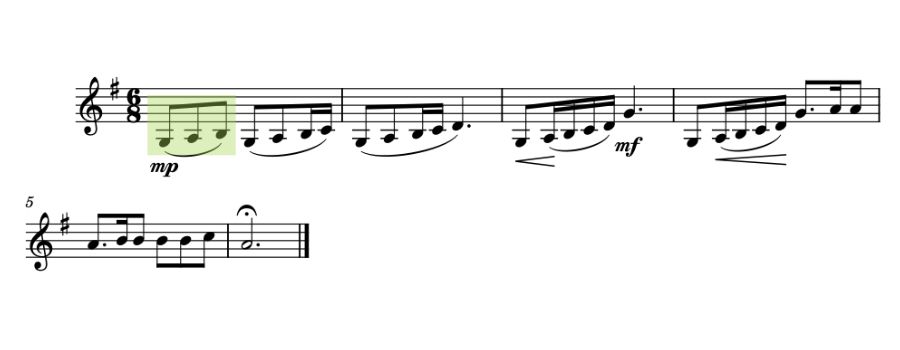
Can you see and hear how the first 3 notes (in green) are developed through note addition? In each bar another note is added. You can do the opposite with note subtraction.
8 Ways to Develop Harmony interactive poster
This interactive poster shares 8 techniques for developing harmony.
2. Suspended Chords
Suspended chords are often used in film music scores to build anticipation and tension.
Time from ‘Inception’ by Hans Zimmer
Keep it Secret, Keep it Safe from ‘Lord of the Rings’ by Howard Shore
3. Modulation examples
Listen out for the successive modulations from 01:44 (then 02:04; 02:25; 02:45).
Listen at 02:52 for the modulation from minor to major.
5. Chord voicing
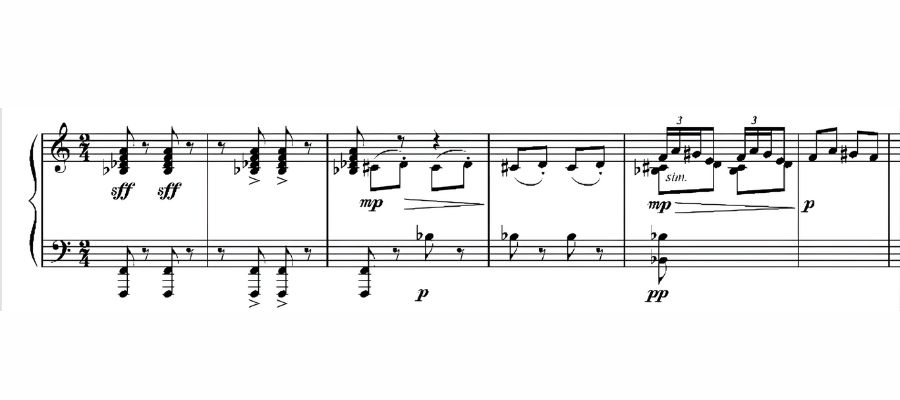
Prelude to ‘Psycho’ by Bernard Herrman
The string chord voicing is close giving a dense texture:
The Unanswered Question by Charles Ives
Listen to the sparse, open chords at the start.
6. Reharmonisation
7. Chromatic chords
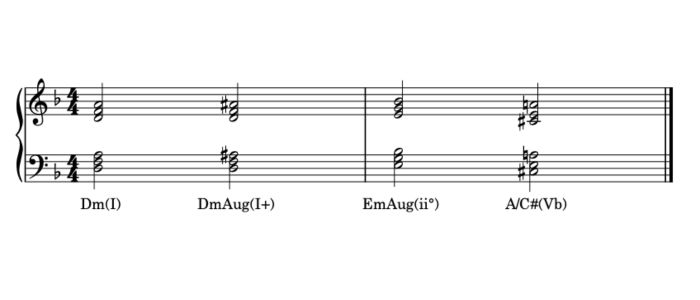
Augmented chord example
Listen to this action film theme based on this chord sequence which includes 2 augmented chords:
8. Harmonic rhythm
I Want You Back by Jackson Five
Listen from 00:30, where there is one chord per bar, then at 00:34 the harmonic rhythm changes to 4 chords per bar. This gives momentum and direction to the song.