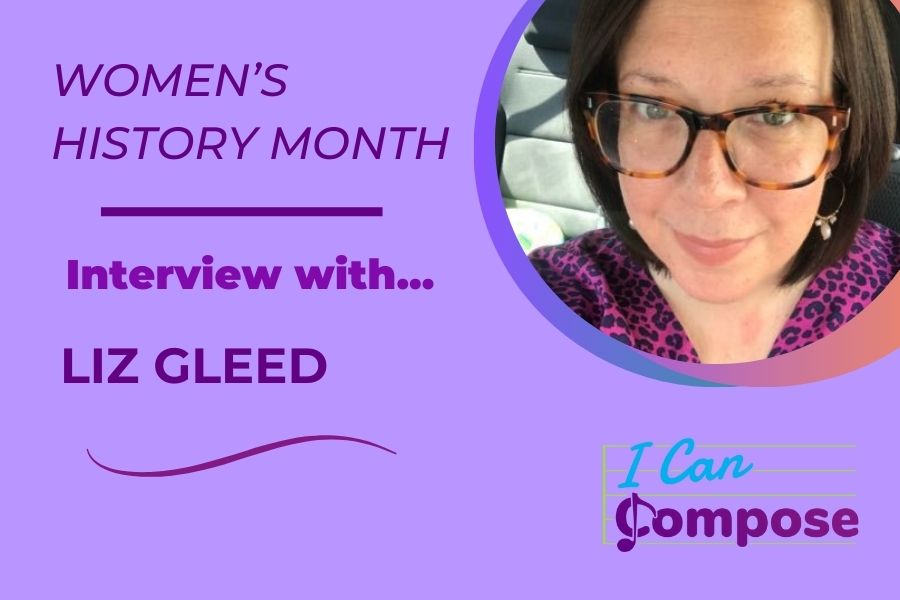
Liz Gleed is the Head of Music at Bristol Cathedral Choir School (BCCS) and we got chatting about music in the classroom, managing composition lessons and designing music curriculums…
What do you enjoy most about being a Head of Music?
Music departments are unique places where music and creativity are at the heart of daily life and there is an energy, safety and shared community about each one that is hard to describe. Leading this school community and driving it in terms of the classroom curriculum and co-curricular events is a joy. The job is varied and musical and no two days are the same. I’m lucky that I teach a range of classes from year 7 to year 13 and we have a busy events schedule so there is no time to get bored. Watching students grow in their musicianship is a privilege I never take for granted, and it is often the small moments, whether a thoughtful performance, an insightful response to a listening extract, or a thrilling improvisation that bring the greatest joy.
It’s a busy job! Do you have any tips for managing the workload?
I’m not sure how qualified I am to advise on managing workload as it can be relentless at times! I have been doing it for a long time now so I hold onto a few tips. Firstly teaching is very cyclical so you know where the push points are, make sure you reflect that in your yearly planning and don’t overburden these spots. For example do not set a big marking deadline the week of a big concert and certainly not on the last day of term so the marking lands in your holiday! Plan ahead. One trick I’ve learnt is that when I feel overloaded to ask myself ‘does this really need to be done right now?’ Often things can wait a little longer than the pressurised voices in our heads tell us. Honour your coffee break!
How do you specifically encourage student composition within your curriculum?
It is a key strand that we weave throughout our curriculum, both in terms of music technology and in our practical keyboard lessons. Making composition a regular habit is important as it sets students up for progression and potentially the ability to access the GCSE course. Students can be more anxious about it I think as it is a more ‘unknown’ and lesser modelled skill, we’ve done a lot of work at BCCS on metacognition and improvisation. We work a lot on confidence in trial and error and the explicit teaching that musical ideas don’t just fall out of your fingers/mouth/PC fully formed and it takes musical exploration and the confidence to make a start.
Which courses (and boards) are offered at your school?
We offer Edexcel GCSE music and A Level. I really like both the courses and feel they serve our students well. The course can be misunderstood I think and people get caught up on the volume of set works, but musicianship is at the core of our curriculum for both. An ambition for us is to offer music technology courses.
At GCSE level how do you manage the challenge of supporting students with their composing work in class and providing feedback?
It is a juggle in the classroom with a class of 15-20 students all working independently on compositions and using a variety of resources. Getting round them all is a huge feat and I rarely meet with more than 5 in one lesson. Good feedback is key and I try to give it as regularly as possible, breaking this feedback into clear, tangible next steps is vital. Good formative feedback is the superpower, not summative. I log all my check-ins with students in a central spreadsheet so I can track the whole class more efficiently. I think working on compositions outside of the lesson time is vital as well and we have scheduled interventions and drop ins and clear expectations that students come to them.
Do you have any go-to schemes or lesson activities that students really enjoy?
One of my favourites is our year 7 music concrete project. Using music technology students create a soundscape called ‘Chronicles in Sound’. Using their phones they collect a variety of sounds from their lives (their dog barking, violin practice, someone talking in another language, washing machine beep etc) and create a bank of audio from which to draw sounds and then manipulate it into a unique composition using a number of digital tools and learning about sonority and musical textures. It always goes down very well with students and their creativity with the project always impresses me.
Beyond the curriculum, what opportunities do you provide for students to develop their skills as composers?
We do several workshops over each year and invite students to participate beyond the classroom. This year we are working with partners and composers from Royal Birmingham Conservatoire, students from Amplify Education have written a 15-minute piece for full orchestral and vocal forces. Themes, lyrics, melodies, textures, chord patterns and rhythms all came from students as they explored collective Bristol identity and celebrated belonging to our community through the power of music. We also do a yearly project in year 7 where our students compose a Christmas oratorio to be performed by the whole year group in the Christmas Concert. It is a big initiative, but it is always a highlight of the BCCS music calendar.
What steps do you take to make sure your students explore a wide and inspiring variety of composers and musical styles?
This is a really important part of curriculum design. The music we share with our students says a lot about what we value and it is essential we explore a range of musical styles in our curriculum. It’s also exciting as musicians ourselves to explore a wider range of musical styles and not stick to the same pieces all the time within our schemes. At BCCS we review our curriculum regularly and have done a lot of work on representation and decolonisation. We try to think hard about using the right composers and showing depth and breadth in all the music we expose our students to both inside and outside of the classroom.
What key pieces of advice would you give to a secondary music teacher developing composition in the classroom?
Plan to scaffold and support your students early on in the process. Balancing technical composing skills and student creativity is always a tricky one, but I have found the more I front load the scaffolding and support the better the outcomes. Modelling and good quality feedback are your super power!
What are you looking forward to in 2026-27?
I am looking forward to our Trust concert and the collaborative composing work with Royal Birmingham Conservatoire hugely, that is in the Spring. In a newer part of my role I am also working with Five Counties SCITT and Bristol Beacon on leading their new ITT secondary music course. This year’s cohort of trainees are a real joy to work with, and I love supporting them as they develop their musical skills alongside their understanding of music education pedagogy. I can’t wait to see them flourish in the profession and to continue growing this course for future trainees.

About Liz Gleed
Liz Gleed (née Oliver) has been teaching secondary music since 2001. She holds a BMus from Cardiff University and a PGCE from Bath Spa University, and has worked in a range of secondary schools across Reading, Wiltshire and Bristol.
Since 2011, Liz has been Head of Music at Bristol Cathedral Choir School, a music specialism academy at the heart of a diverse inner-city community that also educates the cathedral choristers. The department has strong uptake at GCSE and A level and a large, vibrant co-curricular programme supported by a specialist team of peripatetic staff.
Since 2024, Liz has also been the Music Subject Tutor for Five Counties SCITT, working in collaboration with Bristol Beacon and Amplify Education. She is particularly interested in curriculum design and the decolonisation of the music curriculum and is a singer and choral enthusiast. Liz sporadically shares reflections on practice at mymusicclassroom.com.