
For many students, composing music can feel like one of the more challenging aspects of the IGCSE (International General Certificate of Secondary Education) Music course. Unlike listening and performing, which are based on interpretation and execution, composition demands originality, structure, and a clear understanding of the musical elements. However, with the right guidance and resources, students can develop the skills and confidence to excel in this component.
Understanding the IGCSE Music Composition Requirements
The composing component accounts for 30% of the final grade in the IGCSE Music specifications. Students need to submit two compositions.
You can download the specification below:
The aim of the composition component is to assess a student’s ability to create and develop musical ideas independently, with evidence of planning, technical control, and musicality. Compositions should demonstrate understanding and control of: melody, harmony, rhythm, texture, structure, timbre, and dynamics (see mark scheme for more details).
Here’s a summary of the core composition expectations:
| Cambridge IGCSE | |
| Percentage of final grade | 30% |
| No. of compositions | 2 (in contrasting styles) |
| Duration of compositions | No timings stipulated |
| Submission requirements: Composition 1 | Must be presented as a notated score (staff notation) plus recording. |
| Composition 2 | Student-set brief related to an Area of Study. Must be presented as a high-quality recording plus either: – Detailed written commentary (with timings) or – a statement of how the composition relates to the brief together with a score written in a notation system that is appropriate to the style/tradition of the music. |
Submitting scores
Notated scores are required, but this does not necessarily mean a score in staff notation, so it’s worth reading the specification carefully.
Common challenges students face
Composing at the IGCSE level is a unique creative and academic task, and students often face a range of challenges:
Aspects to focus on…
- Starting a composition: Some students struggle with how to begin, feeling overwhelmed by the idea of generating something original from scratch.
- Structuring ideas: Developing a short motif into a whole structured piece with sections such as ternary form (ABA) or rondo can be difficult.
- Writing harmony: Crafting a strong chord progression and harmonising melodies requires theoretical knowledge that may still be developing.
- Balancing creativity and assessment criteria: Students must find a balance between expressing their own musical voice and meeting exam board expectations.
How I Can Compose supports IGCSE Music students
I Can Compose is an online platform designed to guide secondary students through the composing process step-by-step. It’s especially useful for IGCSE students because it provides structured support while allowing space for creative development. Students can log in at school and at home to access the composing resources.
Here’s how the platform helps:
1. Structured Composition Courses
The award-winning online courses provide everything a student needs to get composing independently: exemplar listening, key word glossaries, video content, practical tasks and a model composition.
You can sign up to one of the free online courses:
- Composition: How to Get Started which offers students different starting points and points to think about when embarking on a composition.
- How to Compose Video Game Music Mini Course which includes free access to Dorico notation software and takes students through the process of writing a fantasy game theme and sting.
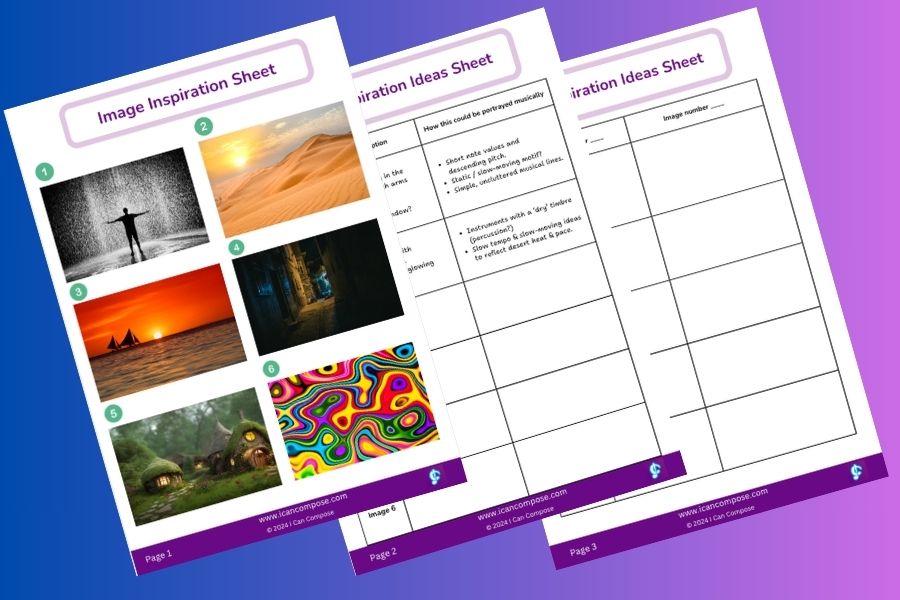
Downloadable sheets included in our free online course: Composition – How to Get Started

One of our most popular courses is How to Compose Video Game Music.
2. Step-by-step guidance
Each of the courses is built around a bespoke model composition which is broken down lesson by lesson. We take students through each aspect of the composing process and they can choose to either follow the guidance closely or take the ideas in their own direction.
3. Focus on musical elements
There’s a lot to think about when composing and trying to tackle everything can be overwhelming. When students focus on a few key musical elements such as rhythm, melody and harmony, their compositions tend to be more successful.
The I Can Compose courses and materials show students how the elements can be used and developed to create original musical ideas and compositions.
4. Genre-specific techniques
Looking to write a Theme and Variations? Stuck on composing a pop song? Needing inspiration for a tango?
Our ‘style & genre’ courses focus on the key features of the chosen styles and clearly demonstrate how they are effectively used in a composition.


5. Professional examples and templates
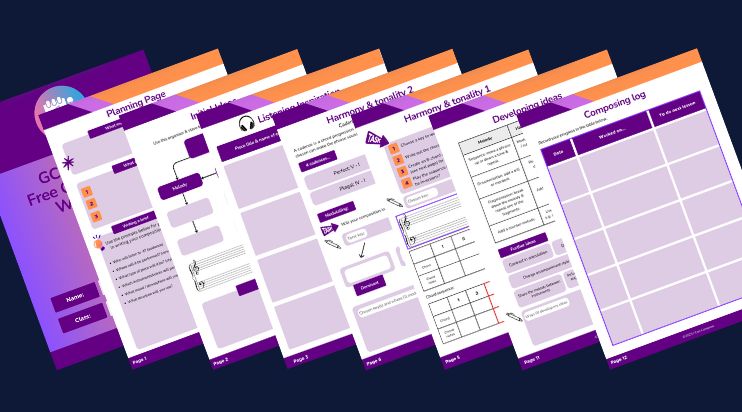
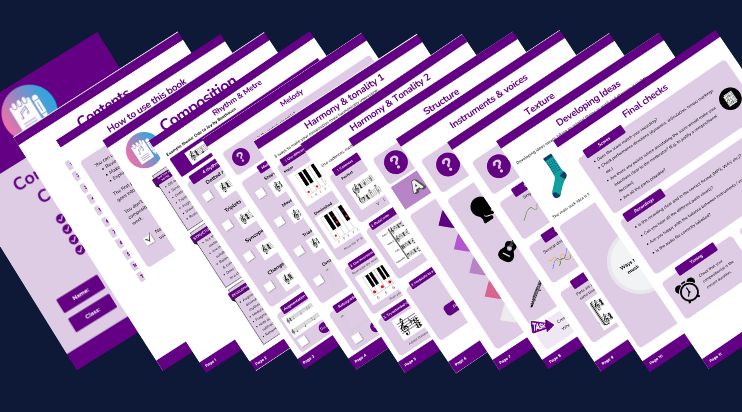
There’s a wide range of downloadable resources which are ideal for IGCSE Music students to use for planning and tracking their composing activities.
Teachers can order these as individual resources or get them included in the annual Teacher Access Plan.
Tips for IGCSE Music Composing Success
- Check the criteria for your exam board – share with students (perhaps in a ‘student-speak’ mark scheme) so that they know what the marking criteria are.
- Build up to the composition with shorter composing tasks focused on different techniques e.g. melody-writing and composing a chord sequence.
- Aim for a balance between using a structured approach and space for creative freedom.


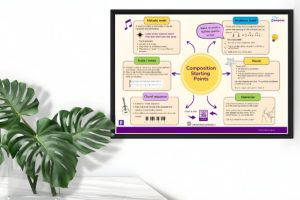 Composition Starting Points Interactive Poster
  NEW! Black History Month Listening Calendar #2 A2 Printed Poster
  Black History Month Listening Calendar
  Women's History Month Listening Calendar A4 Download
  A4 GarageBand shortcut posters
 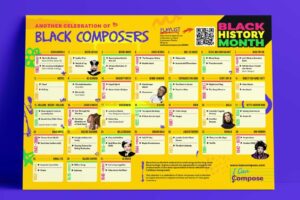 Black History Month Listening Calendar #2 A4 Download
 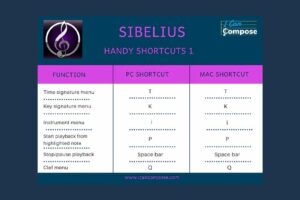 Sibelius Shortcut Posters
 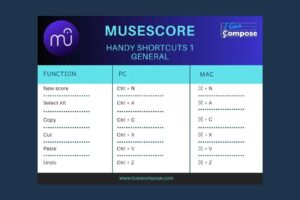 MuseScore Shortcut Posters
 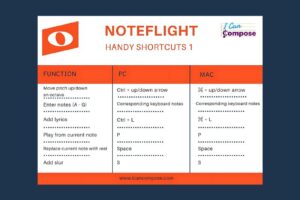 Noteflight Shortcut Posters
  Dorico Quick Reference A3 poster