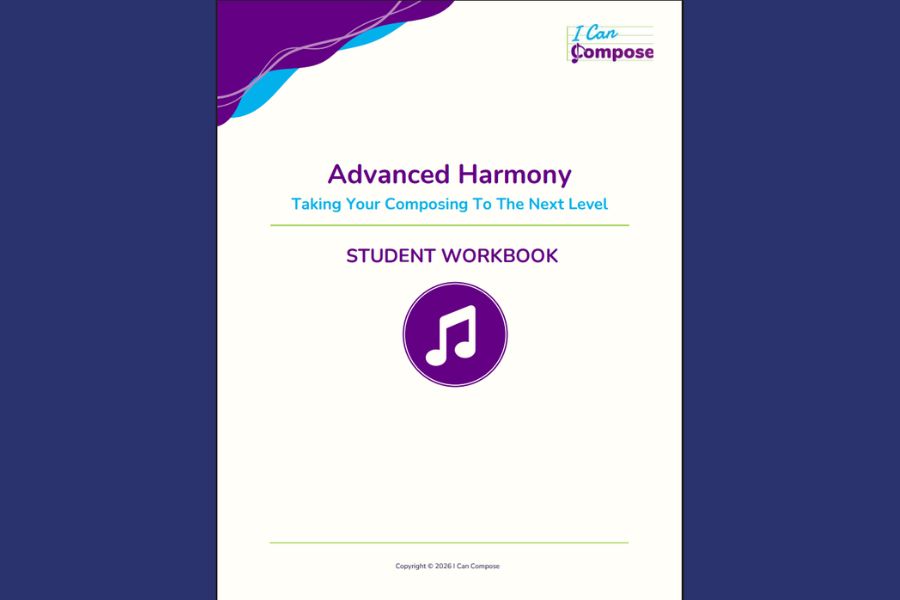
Teaching advanced harmony to post-GCSE music students often presents a unique challenge. While students can be eager to branch out beyond basic diatonic progressions, moving into chromaticism, chord extensions, and unconventional harmony can feel overwhelming without clear, practical scaffolding.
To support teachers and students working through this rewarding area of composition, I Can Compose is pleased to announce our newest classroom resource: the Advanced Harmony Student Workbook.
Written by our Senior Content Developer, Patrick Gazard, for 16-18 year-old music students (such as those preparing for A-Level Music or equivalent courses), this digital workbook provides a structured, accessible path through sophisticated harmonic techniques.
What’s Inside the Workbook?
The workbook guides students step-by-step through advanced harmonic concepts, including:
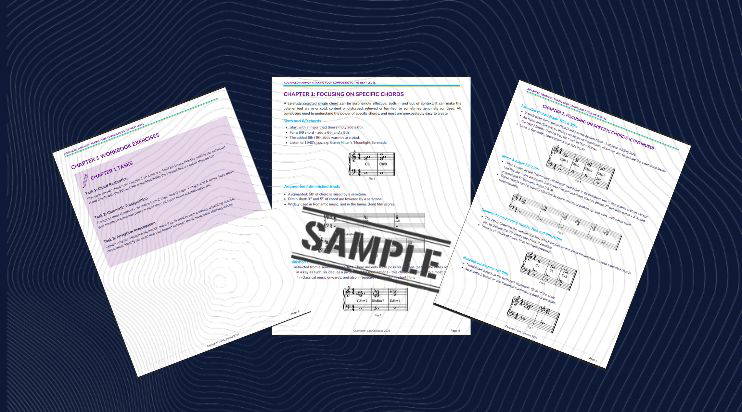
- Extended and Altered Chords: clear breakdowns of 6th, 9th, chromatic, and altered triads.
- Chromatic Harmony: practical approaches to using Neapolitan 6ths, Augmented 6ths, and chromatic transpositions.
- Dissonance: explore suspensions and chords such as the “Herrmann/Hitchcock” chord to understand how dissonance creates tension and atmosphere in media scoring.
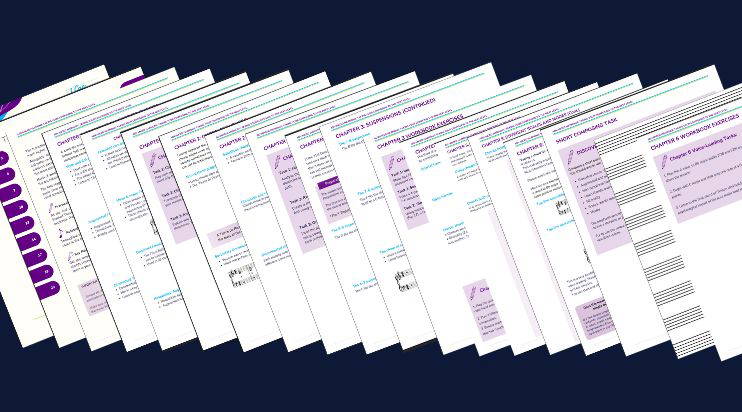
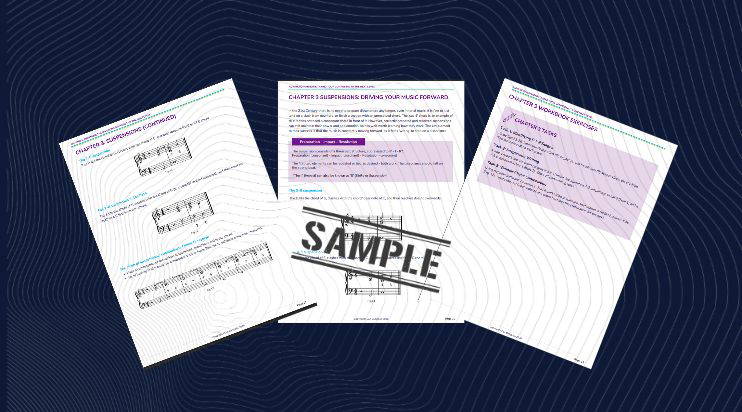
Each of the six chapters features concise explanations, visual musical examples, and targeted listening references. Crucially, every section concludes with creative end-of-chapter tasks. These exercises prompt students to immediately apply what they have learned- whether through playing chords on a keyboard, writing progressions on manuscript paper, or scoring passages directly inside their DAW or notation software.
Flexible Classroom Application
Whether you’re introducing chromaticism for the first time or looking for extension material for higher-achieving students, the Advanced Harmony Student Workbook can fit into your teaching scheme.
You can use the booklet for:
- Structured Classwork: work through chapters chronologically to build up students’ harmonic vocabulary over time.
- Independent Study & Homework: set specific creative tasks or analysis exercises for self-directed study outside the classroom.
- Composition Support: give student composers a toolkit of harmonic choices when working on their own free or brief-based compositions.
The workbook can be downloaded as a digital print-ready PDF, making it straightforward to print copies for your class or distribute electronically through your school’s virtual learning environment.
Available Now
If you are looking to deepen your students’ understanding of harmony and give them practical tools to elevate their own creative work, the new workbook is ready to download today – included in the Teacher Access Plan or can be purchased as an individual resource.