
Context
Eh Ya Ye
Trio Da Kali is a group of distinguished Malian musicians, featuring voice, balafon (wooden xylophone), and bass ngoni (traditional lute), who come from a long lineage of griots (hereditary West African storytellers and musicians). In a groundbreaking collaboration, they joined forces with San Francisco’s Kronos Quartet to reimagine traditional West African repertoire for string ensemble.
Written as part of their award-winning 2017 project Ladilikan, Eh Ya Ye exemplifies how non-Western modal traditions can blend seamlessly with classical chamber music. ‘Eh Ya Ye’ is a traditional Mandé praise song from southern Mali.
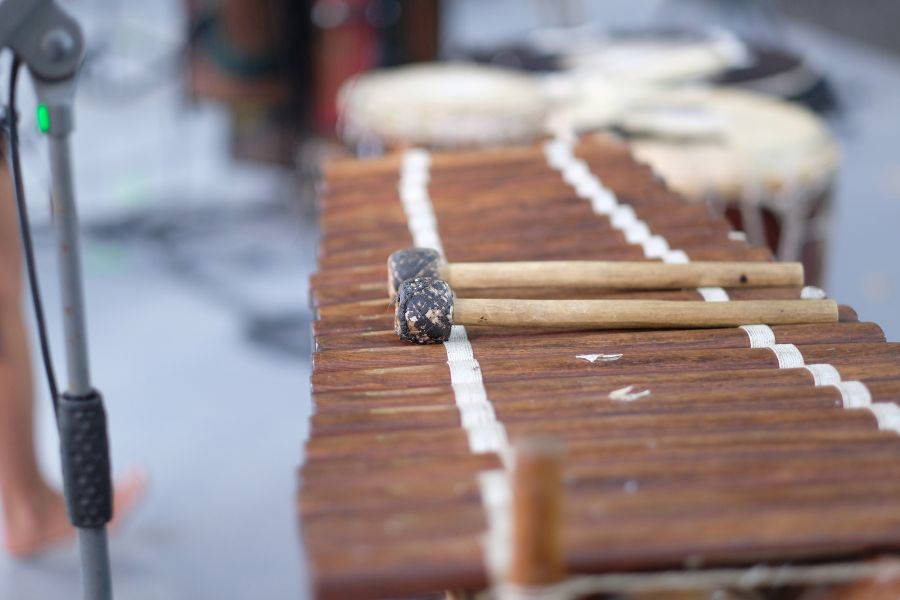
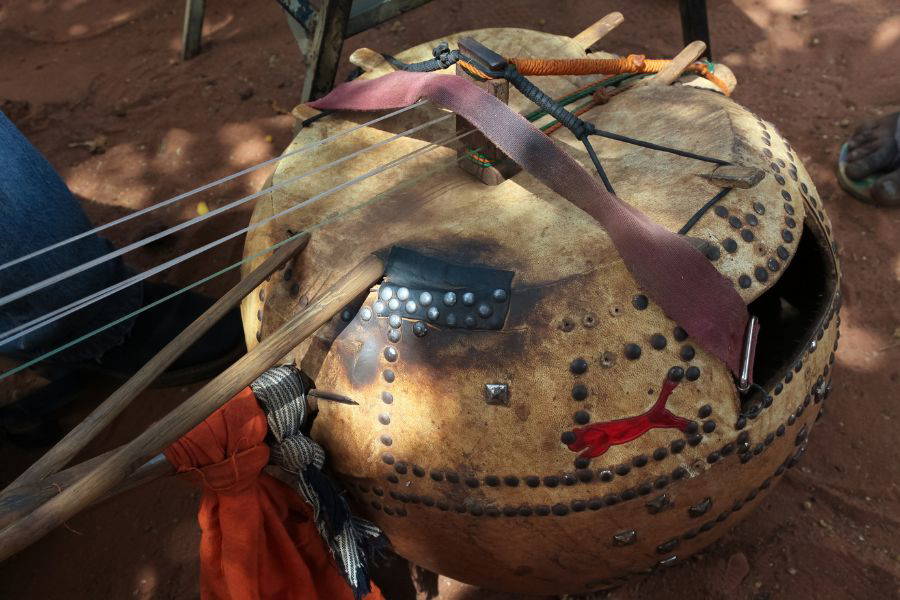
In this music, the Kronos Quartet adapts to the cyclic, ostinato-based nature of Malian music. The violins and cello imitate the percussive, cascading melodies of the balafon and the plucked grooves of the ngoni (see images below), creating a bridge between classical string technique and global oral traditions.
Mali
Mali (Republic of Mali) is a landlocked West African nation whose diverse landscapes stretch from the Sahara Desert in the north to agriculturally rich river valleys in the south.
Malian instruments
Balafon
Ngoni
Eh Ya Ye byTrio Da Kali and Kronos Quartet
Listen For…
- Cyclic ostinati: notice how the structure of the piece is built over repeating, interlocking rhythmic patterns rather than traditional Western verse-chorus forms.
- Percussive attack & sustained strings: listen to how the balafon (prominent at 01:23) and ngoni (plucked lute) provide the fast, percussive rhythmic drive, while the Kronos Quartet provides smooth, sustained arco lines underneath.
- String techniques: listen out for the violin glissandi at 02:32
- Pentatonic melodies: notice the vocal and instrumental lines, which use pentatonic (5-note) scales. Prominent at 03:26.
- Bass groove: listen to how the lowest string lines provide a steady, repeating bass loop (driven by the ngoni and cello) that holds the complex rhythms above it together.
Things To Consider
Think about how you could combine two contrasting musical traditions. Make a list of the key features of each and then consider how you might bring in elements of both styles.
Composition prompt: choose a 5-note pentatonic scale and write a repeating 2-bar plucked string pattern (ostinato). Next, layer a second instrument over it playing a contrasting, syncopated melody using the same 5 notes.